

How Companies Should Prepare for AI-Driven Supply Chain Autonomy
- Gartner predicts that AI-driven autonomous business will dominate supply chains by 2030, emphasizing that a dual roadmap pursuing both
- As many enterprises hit roadblocks due to data quality constraints, Gartner warns against
- By 2029, AI-enabled ecosystem partnerships are expected to generate 40% of overall supply chain value. To capitalize on this, supply chain leaders must build rapid decision-making structures driven by AI-native transformation and cross-enterprise data sharing with external partners.

The central theme of the Gartner Supply Chain Symposium/Xpo 2026 held last May was
the "Arrival of the AI-driven Autonomous Business Era."

In its keynote address, based on a survey of approximately 470 global CEOs and enterprise leaders,
Gartner predicted that AI-driven autonomous business will become the dominant operational model by 2030,
and that by 2031, 60% of supply chain issues will be resolved without human intervention.

In the era of autonomous business—where AI independently makes decisions and takes corresponding actions
—the way we work is shifting beyond simple automation toward
creating new value through human-machine collaboration.
To strengthen future competitiveness, transitioning supply chain organizations into autonomous business models
has also evolved from an option into a critical imperative.
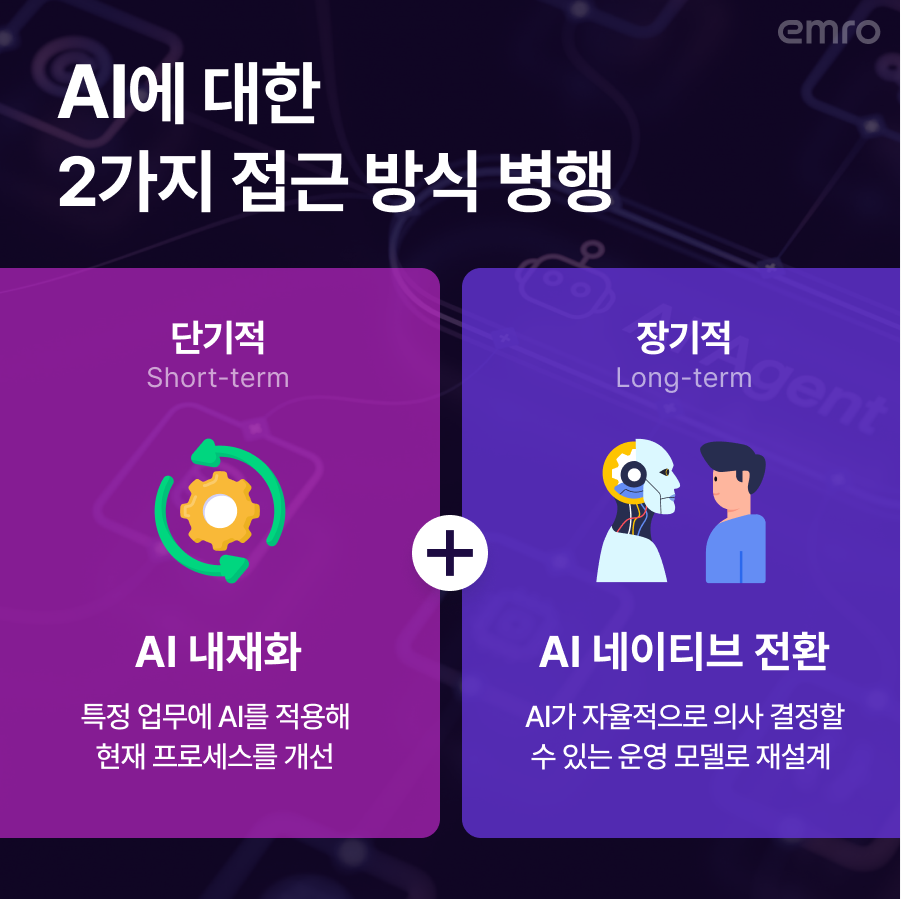
In particular, Gartner emphasized that to achieve this transformation, enterprises must execute a dual roadmap:
pursuing "AI Integration" initiatives that apply AI to specific tasks to optimize current processes,
while simultaneously driving "AI-Native Transformation" to redesign operational models
so AI can make decisions autonomously from the outset.
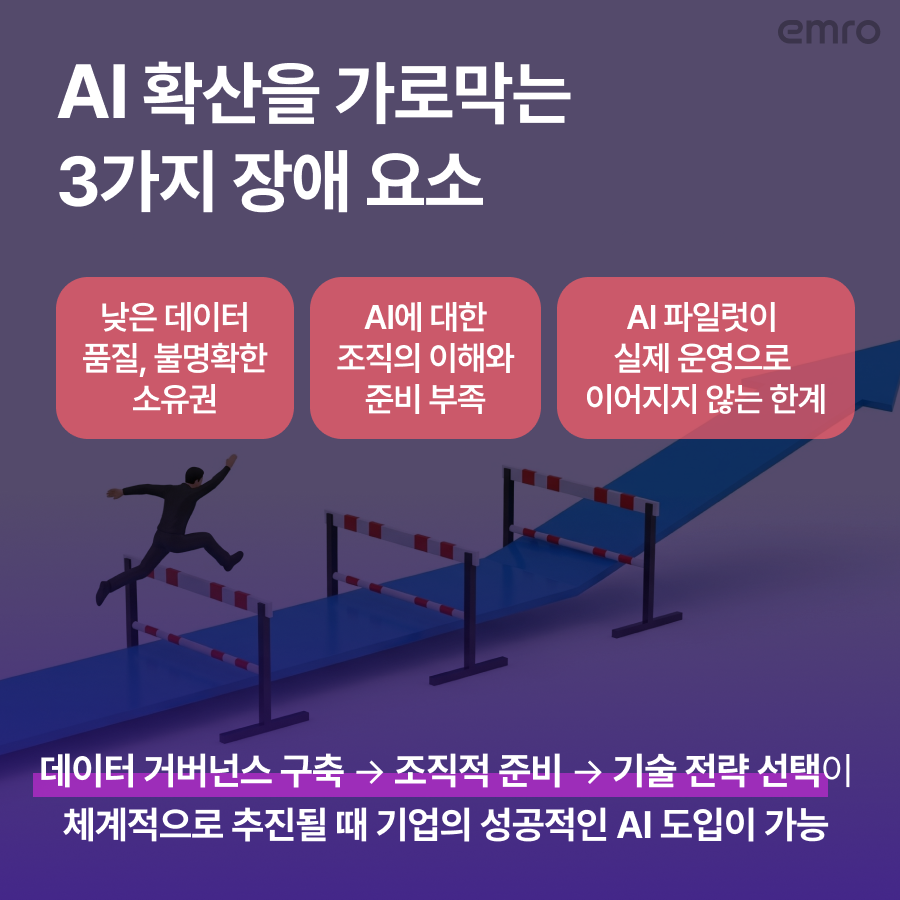
However, many enterprises struggle with AI implementation due to low data quality,
lack of organizational readiness, and the constraints of relying solely on pilot projects.
To overcome these hurdles, organizations should not start by selecting AI tools first.
Instead, they must proceed systematically: establishing data governance and fostering organizational AI literacy
and readiness prior to choosing a technology strategy.
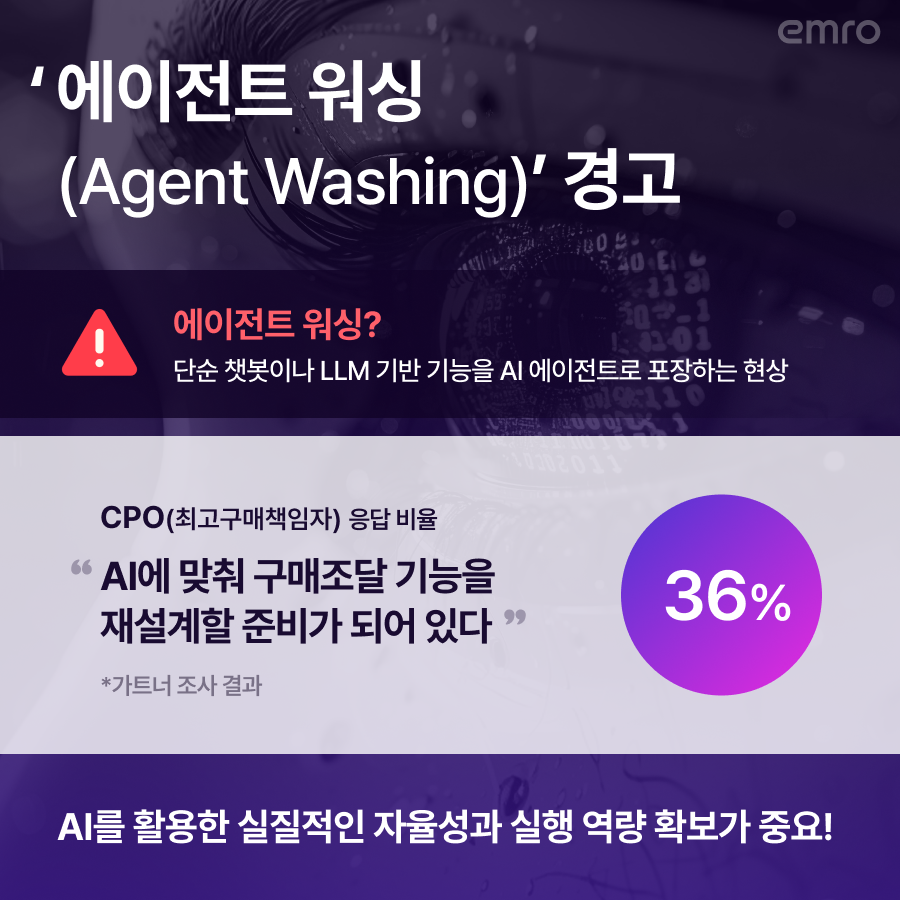
Gartner also warned against the risk of "Agent Washing" in the supply chain technology market
—where simple chatbots or LLM-based workflows are merely repackaged as autonomous AI agents.
According to Gartner's survey, only 36% of Chief Procurement Officers (CPOs) feel confident in their ability
to redesign procurement functions around AI.
This underscores that securing practical autonomy and execution capabilities
powered by AI remains a critical need for enterprises today.
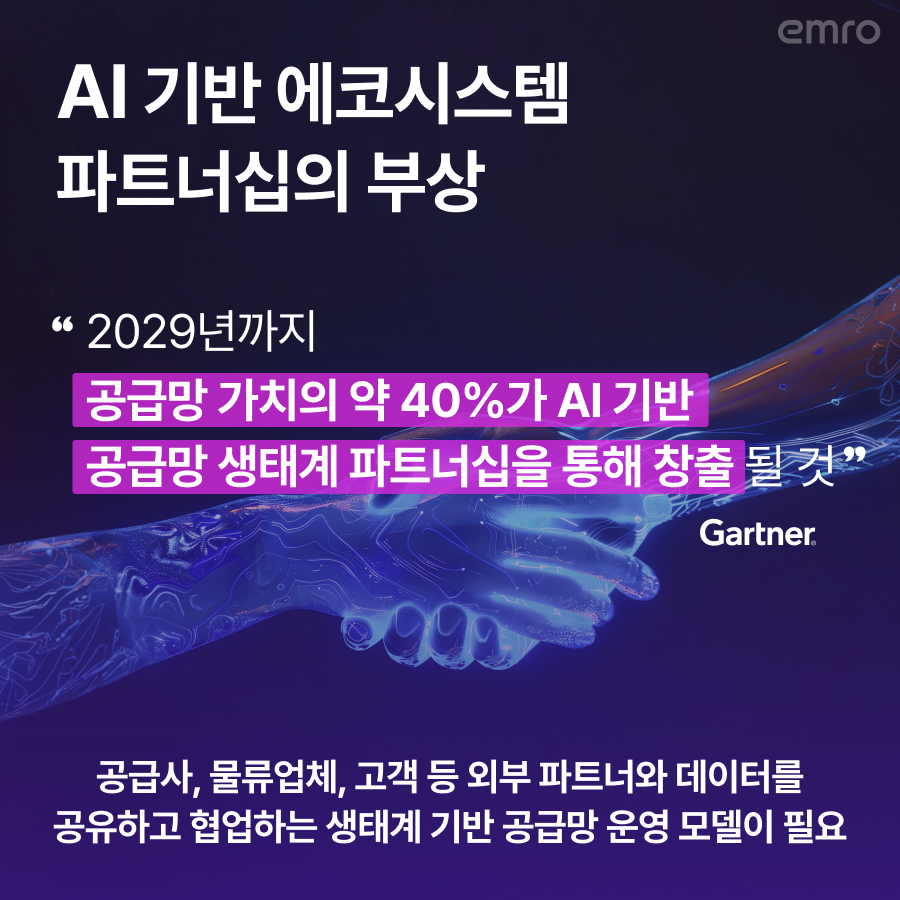
Lastly, Gartner highlighted ecosystem partnerships
—an operational model where supply chains are not managed in isolation,
but collaboratively by sharing data with external partners such as suppliers, logistics providers, and customers.
By 2029, as AI maximizes the potential of ecosystem partnerships,
approximately 40% of supply chain value is projected to be generated through AI-driven supply chain ecosystem partnerships.

AI has now established itself as a pivotal force reshaping overall organizational structures, talent roles, and decision-making processes.
To embrace the era of AI-driven autonomous business, supply chain leaders face three main imperatives:
1. Driving transformation toward an "AI-Native" organization
2. Enabling rapid decision-making through AI and business autonomy
3. Redesigning the structure of existing supply chain ecosystems
Is your organization ready to redefine its supply chain strategy alongside Agentic AI?


